
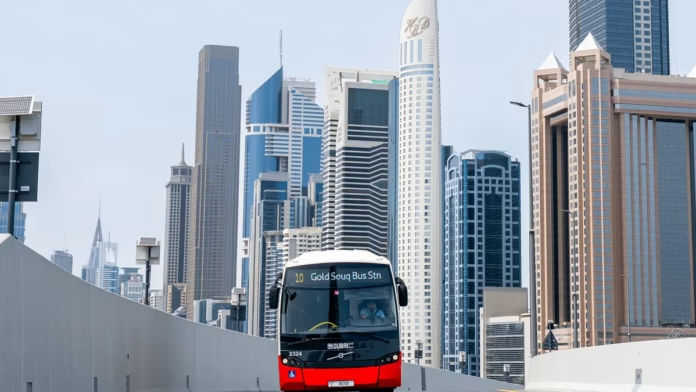

Dubai bus AI is now playing a bigger role in how the city manages real-time public transport, with RTA deploying smart dashboards at the Bus Operations Control Centre. The most eye-catching result for commuters is a reduction of more than 68% in early bus departures.
For daily riders, early departures can be frustrating because a bus leaving ahead of schedule can turn a short wait into a missed connection. The new dashboards are designed to give operators faster insight before small delays or service gaps become bigger passenger problems.
What The New AI Dashboards Do
The system brings several operational tools into daily control-centre workflows. It includes early-departure performance analysis, AI-powered trip cancellation prediction, rapid bus deployment during metro disruptions and short-turning optimisation.
That means the control centre can monitor service behaviour in real time and act faster when something changes. Instead of waiting for repeated passenger complaints or end-of-day reports, operators can spot patterns while the network is still moving.
Why The 68% Figure Matters
A reduction of more than 68% in early departures is a practical reliability gain. Punctuality is not only about buses arriving late. It is also about buses not leaving before passengers reach the stop.
When early departures fall, the timetable becomes more trustworthy. That helps students, workers, airport staff, retail teams and residents who depend on buses for predictable daily movement around Dubai.
Metro Disruptions And Faster Response
The dashboards also support faster bus deployment during metro service disruptions. That matters because Dubai’s public transport system works as a connected network, not as separate pieces.
When a metro disruption occurs, bus support can help absorb pressure and move passengers more efficiently. Better visibility gives operators a clearer picture of where extra buses should go and how quickly they should be deployed.
CO2 And Sustainability Gains
The update is not only about punctuality. Sustainability dashboards have helped reduce engine idling and improve bus parking management, leading to a reduction of more than 13,000 tonnes of CO2 emissions.
That number shows how operational efficiency can also support environmental goals. Less idling, smarter dispatch and better parking management can make the bus network cleaner without changing the basic passenger experience.
What This Means For Dubai Riders
Passengers may not see the dashboards themselves, but they should feel the impact through more reliable services, fewer early departures and stronger disruption handling. The system also fits Dubai’s wider push to use data and artificial intelligence in public services.
The timing is useful as Dubai continues to grow and more residents look for predictable alternatives to driving. Bus reliability affects first-mile and last-mile journeys, feeder links to metro stations, school and work commutes, and weekend movement across busy districts.
Better control-centre decisions can also reduce pressure on frontline staff. If operators can predict cancellations or spot early-departure patterns sooner, drivers and station teams get clearer instructions, and passengers get a network that feels more coordinated.
Residents can keep checking official transport channels such as the RTA public transport portal for route planning and service information.
For more transport and city updates, follow Dubai Bliss in Dubai and the latest Dubai Bliss news.
FAQs
What is Dubai bus AI?
Dubai bus AI refers to the AI-powered smart dashboards now used at RTA’s Bus Operations Control Centre. They help monitor early departures, predict cancellations and support faster operational decisions.
How much have early bus departures fallen?
RTA says early departures have fallen by more than 68%. That matters because buses leaving ahead of schedule can cause missed journeys even when passengers arrive close to the listed time.
Does the system help during metro disruptions?
Yes. The dashboards include tools for immediate bus deployment during metro service disruptions, helping operators respond faster when passenger demand shifts.
Does the AI system reduce emissions?
Yes. Sustainability dashboards have helped reduce more than 13,000 tonnes of CO2 emissions by cutting engine idling and improving bus parking management.