
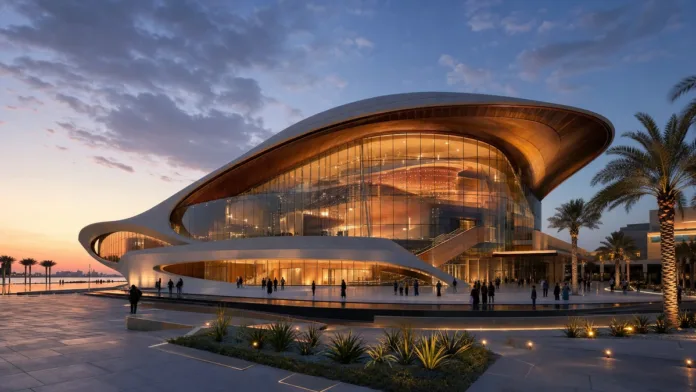

Dar Al Funoon Abu Dhabi is set to become one of the UAE’s next major cultural landmarks, with the new performing arts centre planned near Saadiyat Cultural District and aiming to open in 2030.
The project, whose name translates to House of the Arts, will bring a major performance venue to an area already known for museums and cultural destinations. Its planned capacity exceeds 6,000 seats across several artistic spaces.
For culture lovers, the announcement adds another reason to watch Abu Dhabi’s fast-growing arts scene. For UAE tourism, it strengthens Saadiyat’s position as one of the region’s most important cultural districts.
What Is Dar Al Funoon Abu Dhabi?
Dar Al Funoon Abu Dhabi is a new performing arts centre planned near Saadiyat Cultural District. It is designed to host major artistic productions and cultural experiences for local, regional and international audiences.
The venue is expected to support opera, ballet, theatre, live performing arts, residencies, touring partnerships and co-productions with leading arts institutions.
That makes it different from a single-purpose theatre. The project is being positioned as a permanent home for performance and artistic exchange in Abu Dhabi.
Where Will It Be Located?
The centre will be located near Saadiyat Cultural District. That location is important because Saadiyat is already home to major cultural landmarks and upcoming museum projects.
The wider district includes Louvre Abu Dhabi, Zayed National Museum, Natural History Museum Abu Dhabi, teamLab Phenomena Abu Dhabi and the upcoming Guggenheim Abu Dhabi.
Dubai Bliss readers following UAE culture can also track Dubai’s own creative push through the Dubai Museum of Digital Art, another sign of how fast the country’s arts map is changing.
When Will Dar Al Funoon Open?
The project is aiming to open in 2030. That gives Abu Dhabi several years to develop the venue, shape its programming and build partnerships with regional and international arts organisations.
As with any major cultural project, the exact opening timeline can evolve. Residents and visitors should treat 2030 as the target year and watch for official updates as construction and programming details progress.
For now, the announcement gives the UAE culture calendar a long-term landmark to follow.
How Big Will The Venue Be?
Dar Al Funoon Abu Dhabi is planned with a total capacity of more than 6,000 seats across its artistic spaces. The main multipurpose performance hall will have more than 2,000 seats.
The project will also include a 3,500-seat open-air amphitheatre, a 400-seat studio theatre and a 250-seat jazz venue. That mix gives the centre flexibility for large productions and more intimate performances.
The size also shows the ambition behind the project. Abu Dhabi is not only adding another venue; it is building a full performing arts ecosystem around different audience sizes and formats.
Who Designed Dar Al Funoon?
The centre is designed by the late Frank Gehry, one of the world’s most recognised contemporary architects. Gehry is also associated with the upcoming Guggenheim Abu Dhabi.
The design is described as being inspired by music and the performing arts. A transparent facade is also part of the concept, symbolising openness to creativity and cultural exchange.
That architectural language matters because performing arts venues need to feel alive even before a show begins. The building itself is expected to become part of the cultural experience.
What Kind Of Performances Will It Host?
The venue is expected to host opera, ballet, theatre and other live performing arts. It will also support long-term artistic residencies, international touring partnerships and co-productions.
Those details point to a centre that can attract major global productions while also creating opportunities for Emirati and regional talent.
If delivered well, Dar Al Funoon can help bridge local creativity and international performance circuits. That is where the project could have lasting value beyond tourism headlines.
Why It Matters For Abu Dhabi
Abu Dhabi has spent years building cultural infrastructure around Saadiyat. Museums have led much of that story, but a major performing arts centre adds a different kind of energy.
Live performance brings repeat audiences, seasonal programming, school engagement, touring shows, festivals and night-time cultural activity. It can make a district feel active throughout the year rather than only around exhibitions.
For official UAE cultural and tourism context, readers can follow Visit Abu Dhabi and Abu Dhabi cultural announcements as more details emerge.
How It Fits The UAE Culture Push
The UAE is building a layered culture map across Abu Dhabi, Dubai and Sharjah. New museums, restored heritage sites, digital art spaces and performance venues are all part of that shift.
Dar Al Funoon Abu Dhabi gives the performing arts a larger place in that story. It also adds a future anchor for visitors who already travel to Saadiyat for museums and cultural experiences.
For residents, the promise is simple: more world-class performances closer to home, and more opportunities for the region’s artists to work with major international institutions.
FAQs
What does Dar Al Funoon mean?
Dar Al Funoon translates to House of the Arts. The name reflects the project’s focus on performance, culture and artistic exchange.
Where will Dar Al Funoon Abu Dhabi be located?
It will be located near Saadiyat Cultural District in Abu Dhabi. The district is already home to several major museums and cultural destinations.
When will Dar Al Funoon Abu Dhabi open?
The project is aiming to open in 2030. The exact opening timeline may be updated as development progresses.
How many seats will Dar Al Funoon have?
The centre is planned with more than 6,000 seats across its spaces. These include a major performance hall, open-air amphitheatre, studio theatre and jazz venue.
Who designed Dar Al Funoon Abu Dhabi?
The project is designed by the late Frank Gehry, one of the world’s best-known contemporary architects.