
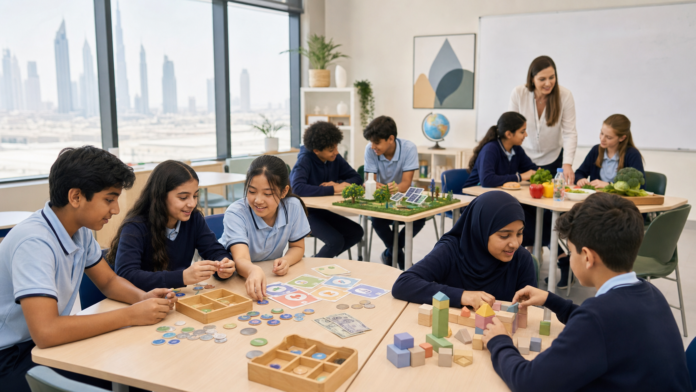

Dubai life skills schools learning is set to become part of the classroom from the 2026-27 academic year, giving students more structured support for practical adulthood skills.
The new Skills for Life initiative will be introduced by the Knowledge and Human Development Authority after a direction from Sheikh Hamdan bin Mohammed bin Rashid Al Maktoum. It is being launched in the Year of the Family and will support learners from early childhood through adulthood.
What Students Will Learn
The initiative will bring practical, personal and social skills into the wider curriculum. Planned themes include healthy lifestyles, nutrition, financial and consumer literacy, social skills, relationship skills, sustainability and mental resilience.
That mix is important because many parents want schools to prepare children for real decisions, not only exams. Money habits, wellbeing, digital judgment and communication all shape how young people handle adult life.
How It Will Fit Into Schools
Skills for Life will be tailored by age. Younger children may focus on basic routines, social confidence and healthy habits, while older students can handle more complex topics such as consumer choices, resilience and future planning.
The initiative is expected to integrate with existing learning rather than sit as a one-off activity. That gives schools room to connect practical skills with subjects, projects, assemblies and pastoral support.
Why Parents Should Care
Dubai families often choose schools based on academics, fees, facilities and university pathways. This initiative adds another question: how well does a school prepare children for everyday life?
Financial literacy can help students understand saving, spending and basic consumer decisions. Mental resilience can help them manage stress and change. Relationship and social skills can support better communication at school, home and work.
Parents may also see the benefit at home. When schools use shared language around wellbeing, nutrition, money and social responsibility, families can continue the same conversations outside class.
A Response To A More Complex World
The initiative is designed for a world shaped by technology, fast information and constant social pressure. Students need more than subject knowledge when they grow up in a connected environment.
Teaching life skills early can also make difficult conversations more normal. Nutrition, wellbeing, sustainability and responsible decision-making become part of learning rather than topics families only discuss when there is a problem.
The timing also suits Dubai’s wider education market, where schools serve families from many cultures and curricula. A common life-skills direction can give schools a shared framework while still leaving room for age and community differences.
What To Watch Before Rollout
Parents should watch how individual schools explain the rollout, train staff and communicate age-appropriate content. The best programmes will feel practical, consistent and linked to student wellbeing.
Schools will need to avoid turning life skills into posters and slogans. The useful version is hands-on: budgeting examples, healthy choices, teamwork, respectful communication and problem-solving that students can actually practise.
A clear rollout timeline will also help families understand what changes in class and what remains part of normal home guidance.
Dubai Bliss readers tracking education updates can also revisit our guide to Dubai school fees for 2026-27. Official school and regulator information is available through the KHDA website.
The strongest part of the announcement is its breadth. If schools implement it well, Skills for Life could help students connect classroom learning with the choices they will make every day outside school.
FAQs
When will Dubai schools introduce Skills for Life?
The initiative is set to roll out from the 2026-27 academic year. Schools are expected to adapt it for different age groups.
Which life skills will students learn?
Topics include healthy lifestyles, nutrition, financial literacy, consumer awareness, social and relationship skills, sustainability and mental resilience.
Is this only for older students?
No. The initiative is designed to support learners from early childhood through adulthood, with content tailored to age and development level.
Will it replace regular subjects?
No replacement has been announced. The plan is to integrate life skills into the wider curriculum so practical learning supports academic development.