
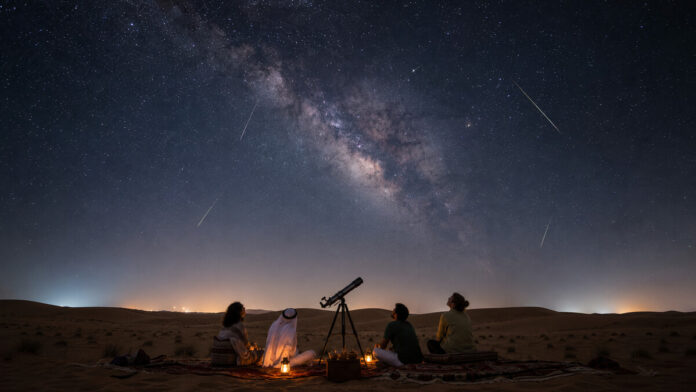

Perseids UAE 2026 viewing should be at its best from August 8 to 15, giving residents a strong reason to escape city lights and look up.
The Perseids meteor shower is one of the year’s most anticipated sky events. During the active period, viewers could see anything from around 10 to more than 50 shooting stars per hour, depending on conditions.
Why August 8 To 15 Matters
The August 8 to 15 window is expected to bring the most active phase of the meteor shower. This year, the timing is helped by very little moonlight, which should make the sky darker and improve visibility.
That does not mean every viewer will see the same number of meteors. Cloud, haze, light pollution and patience all make a difference.
Where To Watch In The UAE
The best viewing spots are away from city lights. Desert areas, mountain viewpoints and quiet camping locations usually offer better skies than central Dubai or Abu Dhabi.
If you are driving out at night, choose a safe, legal and accessible location. Tell someone where you are going, bring water and avoid stopping in unsafe roadside areas just because the sky looks dark.
Do You Need A Telescope?
No telescope is needed for meteor spotting. In fact, the best approach is to lie back, give your eyes time to adjust and scan a wide patch of sky.
It can take around 20 minutes for your eyes to settle into the dark. Put your phone away as much as possible, because bright screens can reset your night vision.
Photography Tips For Beginners
August is often a strong month for astrophotography in the UAE because summer skies can be clear. If you want photos, bring a tripod and use long exposure settings.
Do not spend the whole night adjusting camera settings if your main goal is to enjoy the shower. Meteors are unpredictable, so a relaxed setup often works better than constant tinkering.
Guided Stargazing Options
Adventure and astronomy groups sometimes host guided skywatching sessions, especially around major celestial events. Dubai Astronomy Group regularly organises telescope viewings, workshops and public astronomy events.
Check the Dubai Astronomy Group website for official listings. Dubai Bliss readers can also browse our UAE events updates for more night-out ideas.
What To Pack
Bring water, a mat or reclining chair, a light jacket if you are heading to higher ground, a small red-light torch if available and enough snacks for a late night. A power bank is useful, but keep screen brightness low.
Families should choose locations carefully. A dark sky is great, but safe parking, toilets, phone signal and an easy return route matter too.
Weather can still affect the plan. Summer haze, dust or humidity may reduce visibility even when the moonlight is favourable, so it helps to keep expectations realistic and check conditions before driving far.
For children, make the outing comfortable rather than overly ambitious. A shorter dark-sky stop with blankets, water and a clear return time can work better than an overnight plan that leaves everyone tired before the meteors peak.
Photographers should avoid bright torches and car headlights once cameras are set up. Small habits like parking away from the viewing area and using low light help everyone around you enjoy the sky.
The Perseids are best enjoyed slowly. Arrive after sunset, settle in, let your eyes adjust and give the sky time to deliver.
FAQs
When is the best time to see the Perseids in the UAE in 2026?
The strongest viewing window is expected from August 8 to 15, 2026.
How many meteors could be visible?
Viewers could see around 10 to more than 50 shooting stars per hour, depending on sky conditions and light pollution.
Do I need a telescope for the Perseids?
No. Meteors are best viewed with the naked eye because they can appear across a wide area of the sky.
Where should I go stargazing?
Choose a safe dark-sky location away from city lights, such as a suitable desert or mountain viewing spot.