
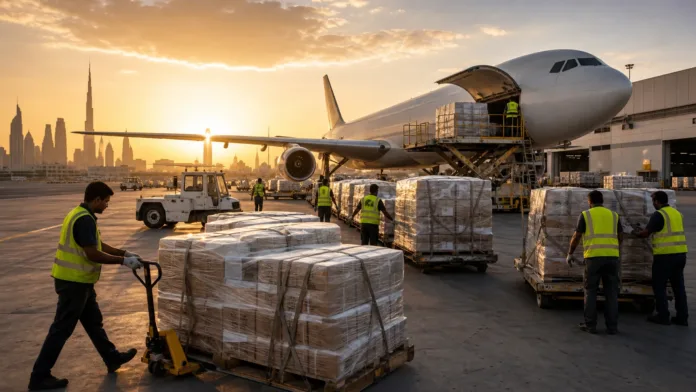

Dubai Humanitarian Uganda airlift operations have continued with a fourth relief shipment, sending 72.5 metric tonnes of cargo to support communities affected by an outbreak response in the region.
The latest shipment landed in Entebbe and carried supplies drawn from prepositioned stocks in Dubai. It shows how the emirate’s humanitarian logistics network can move emergency cargo quickly when partner agencies need support.
What Was Sent?
The cargo included water purification tablets, mobile storage units, generators, tarpaulins, data loggers and an ablution unit. Each item serves a practical purpose in field conditions.
Water purification tablets help reduce waterborne disease risks. Generators support treatment sites where power is unreliable. Tarpaulins can be used for shelter, while data loggers help track medicines and vaccines that depend on temperature control.
Which Partners Were Involved?
The supplies came from the World Food Programme’s United Nations Humanitarian Response Depot and UNICEF stocks housed in Dubai Humanitarian warehouses. The latest flight was also supported by Dubai Royal Air Wing aircraft.
That mix of warehousing, air transport and agency coordination is the core of Dubai’s humanitarian role. The city is not only a donor location; it is a storage and movement hub for international relief operations.
Why Dubai’s Location Matters
Dubai’s aviation links, logistics infrastructure and emergency warehousing can shorten the time between a partner request and a field delivery. In an outbreak response, speed can affect hygiene, treatment capacity and safe storage.
The value is especially clear when cargo is specialised. Cold-chain tracking devices, mobile storage units and hygiene infrastructure need to arrive in usable condition, not sit in a warehouse during a fast-moving emergency.
A Busy Year For Relief Shipments
The latest flight adds to a wider 2026 relief pattern. Dubai Humanitarian has facilitated nine air and land shipments this year, moving more than 450 metric tonnes to emergency responses in Gaza, Lebanon, Mozambique and Afghanistan as well as Uganda.
Those figures show a network designed for repeated use. Humanitarian logistics is rarely a one-flight story, because emergencies often need follow-up cargo as conditions change.
How To Read This Update Carefully
This is a relief logistics story, not a dramatic disaster narrative. The important details are the cargo, partners, destination and response function.
For Dubai residents, it is also a reminder that the city’s global role extends beyond tourism, finance and aviation. Humanitarian warehousing and emergency shipment coordination are part of Dubai’s international footprint.
Dubai Bliss readers can follow more civic and UAE updates in our UAE Pulse coverage. More information about the organisation is available through Dubai Humanitarian.
Why It Matters
Relief cargo only becomes useful when it reaches the people and teams who can deploy it. In this case, the shipment supports treatment, hygiene, water safety and field operations.
The story also highlights the importance of prepositioned stock. Keeping supplies ready in Dubai allows partner agencies to move faster than they could if every item had to be sourced from scratch after an emergency begins.
The strongest takeaway is logistical. A well-placed humanitarian hub can make international aid more responsive, especially when aircraft, warehouses and partner agencies are already connected.
For readers in Dubai, the numbers also make the operation easier to understand. A shipment of 72.5 tonnes is not symbolic cargo; it is a working load of field equipment, hygiene support and treatment-site supplies.
That is why humanitarian hubs invest in readiness before a crisis peaks. If the supplies, aircraft access and partner approvals are already aligned, response teams can spend less time solving logistics and more time supporting frontline needs.
The update also shows why Dubai’s airport and cargo ecosystem matters beyond commercial travel. The same connectivity that supports passengers and trade can support emergency relief when speed, storage and coordination are critical.
FAQs
How much cargo was sent in the latest airlift?
The latest shipment carried 72.5 metric tonnes of humanitarian cargo to Entebbe, Uganda.
What supplies were included?
The cargo included water purification tablets, mobile storage units, generators, tarpaulins, cold-chain data loggers and an ablution unit.
Which organisations supplied the cargo?
The supplies came from WFP/UNHRD and UNICEF prepositioned stocks held in Dubai Humanitarian warehouses.
Why is Dubai important for humanitarian logistics?
Dubai offers warehousing, air links and coordination capacity that can help move emergency supplies quickly to partner agencies and affected regions.