
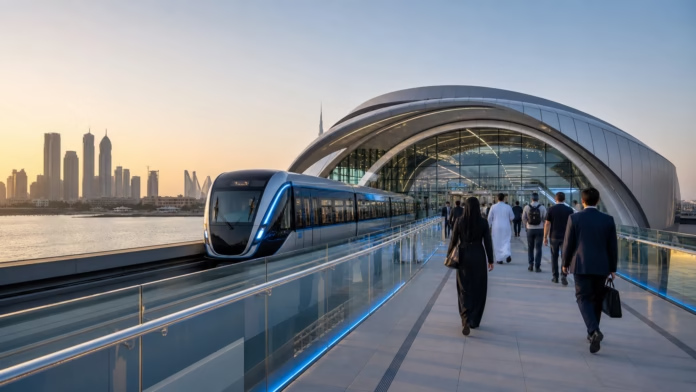

Dubai Metro Blue Line stations are starting to feel much more real for commuters, residents and property watchers. Fresh station-design details have put the focus back on how the new line will look, where it will connect, and why it could matter for daily life in several fast-growing Dubai communities.
The project is one of Dubai’s biggest public transport upgrades. The Blue Line is planned as a 30km route with 14 stations, including three interchange stations, seven elevated stations and four underground stations. It will connect with the existing Green Line at Creek Station and with the Red Line at Centrepoint Station, giving more districts a direct route into the wider metro network.
For Dubai residents, the headline is simple: the Blue Line is being built for communities that currently rely heavily on cars, buses and taxis. When it opens, the line is expected to serve areas linked to around one million people under the Dubai 2040 Urban Master Plan.
What Makes The New Stations Different?
The station designs are not being treated as standard platforms with basic entrances. The Blue Line will include a major underground interchange at Dubai International City 1, planned across more than 44,000 square metres. That station is expected to become the largest underground interchange station in the Dubai Metro network and could handle around 350,000 riders a day.
Another major talking point is the Emaar Properties Station at Dubai Creek Harbour. The station is planned to rise 74 metres, making it the world’s tallest metro station. It will cover around 11,000 square metres and is expected to serve residents and visitors in Dubai Creek Harbour, one of the city’s most watched waterfront districts.
The design language also gives the Blue Line a more distinctive identity. The remaining stations are being shaped around themes inspired by air, water, earth and fire. That means the line should feel different from older metro stations, with more attention on light, movement, natural textures and interior atmosphere.
Dubai Metro Blue Line Route: Which Areas Will It Serve?
The Blue Line will run in two main directions. One section starts from Creek Interchange Station on the Green Line in Al Jaddaf. It then passes through Dubai Festival City, Dubai Creek Harbour and Ras Al Khor Industrial Area before reaching International City 1. From there, it continues towards International City 2 and 3, Dubai Silicon Oasis and Dubai Academic City.
The second section starts from Centrepoint Interchange Station on the Red Line in Al Rashidiya. It will pass through Mirdif and Al Warqa’a before reaching the International City 1 interchange. The project also includes a depot and maintenance facility in Al Ruwayyah 3.
That route matters because it brings rail access closer to residential neighbourhoods, student zones, office districts and new development areas. Dubai Silicon Oasis and Dubai Academic City should benefit strongly because the line gives those areas a more direct public transport link to the rest of Dubai.
Opening Date And Progress
The Dubai Metro Blue Line is scheduled to open on September 9, 2029. The date is symbolic because it matches the 20th anniversary of Dubai Metro’s original launch.
The project has already moved beyond early planning. Tunnelling works have started, and the route is being developed with a mix of underground and elevated sections. The project is expected to reach 30% completion by the end of 2026.
The Blue Line also includes serious engineering work below ground. The tunnel boring machine named Al Wugeisha is more than 160 metres long and weighs over 2,000 tonnes. It is designed to work around the clock and move in several directions from International City 1.
Why It Matters For Dubai Commuters
Dubai’s roads have been under pressure as more people live, work and study across newer communities. The Blue Line is designed to reduce congestion along the corridors it serves and give residents another option beyond private cars.
Official targets point to a possible 20% reduction in traffic congestion along Blue Line corridors. The line is also expected to offer direct journeys from some served areas to Dubai International Airport in about 20 minutes, which would be a big practical shift for regular travellers and airport workers.
The wider metro and tram network already plays a central role in Dubai mobility. As Dubai continues to add road upgrades and transport improvements, residents can also track related updates through our Dubai RTA June road upgrades guide.
What To Watch Next
The most useful updates to watch will be construction milestones, station-name confirmations, road diversions, interchange access details and final operating plans. Residents in International City, Mirdif, Al Warqa’a, Dubai Creek Harbour, Dubai Silicon Oasis and Dubai Academic City should pay especially close attention because the line could change commute choices in those areas.
For official mobility information, readers can follow Dubai’s Roads and Transport Authority as project updates continue. The key point for now is that the Blue Line is no longer just a future map line. Its stations, designs and construction schedule are becoming visible parts of Dubai’s next transport chapter.
FAQs
When will the Dubai Metro Blue Line open?
The Dubai Metro Blue Line is scheduled to open on September 9, 2029. The date lines up with the 20th anniversary of Dubai Metro’s launch.
How many stations will the Dubai Metro Blue Line have?
The Blue Line is planned with 14 stations. These include interchange, elevated and underground stations across a 30km route.
Which areas will the Blue Line connect?
The route will serve areas including Creek, Dubai Festival City, Dubai Creek Harbour, Ras Al Khor, International City, Dubai Silicon Oasis, Dubai Academic City, Centrepoint, Mirdif and Al Warqa’a.
What is special about the Emaar Properties Station?
The Emaar Properties Station at Dubai Creek Harbour is planned to rise 74 metres. It is expected to become the world’s tallest metro station.
Will the Blue Line reduce traffic?
The project is expected to reduce traffic congestion by around 20% along the corridors it serves. Its biggest impact should be in communities that gain direct metro access for the first time.